Why Recovery Matters More Than Most People Realize (And How Red Light Therapy May Help)
 Dr. Beata Harasim
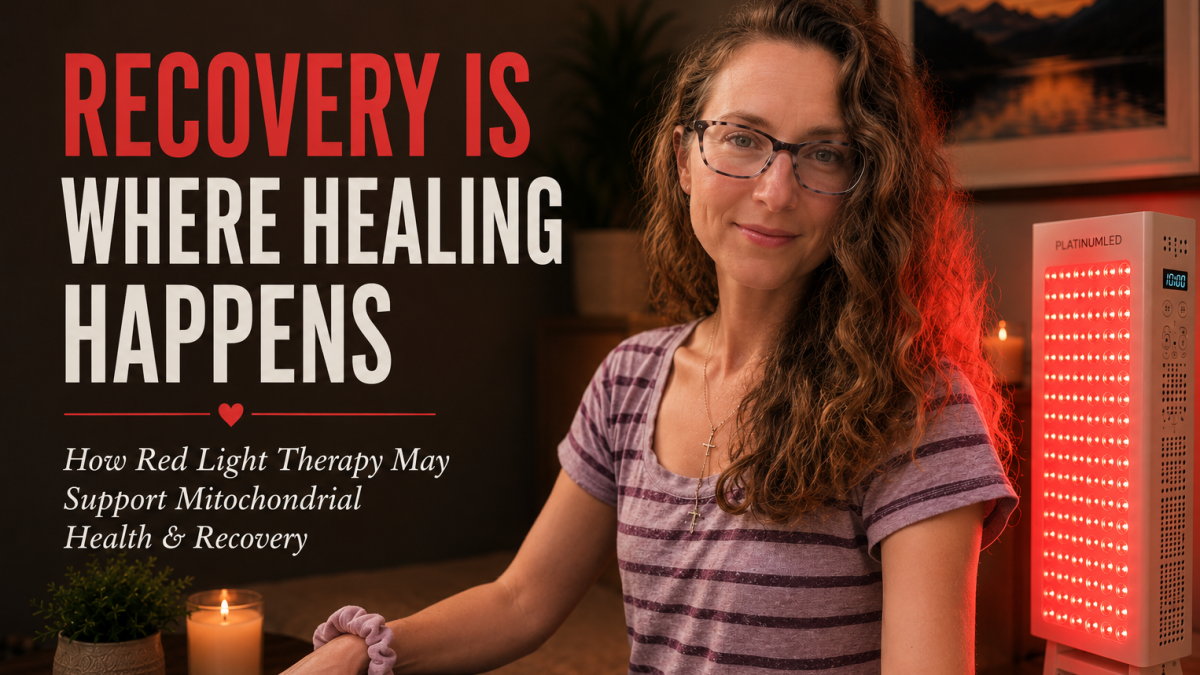
Learn how red light therapy may support recovery, mitochondrial health, cellular energy, and overall wellness as part of a holistic approach to healin
Why Recovery Matters More Than Most People Realize (And How Red Light Therapy May Help)
Recovery is something we often associate with athletes.
Recovering after a workout. Recovering after a race. Recovering after lifting weights.
But recovery isn't just for athletes.
Recovery is something every body depends on.
We recover from busy workdays. We recover from illness. We recover from injuries. We recover from surgery. We recover from pregnancy. We recover from emotional stress. We recover while we sleep.
Every single day, your body is working behind the scenes repairing tissues, producing energy, adapting to challenges, and restoring balance.
The better your body can recover, the better it can function.
Recovery doesn't happen in isolation. It's influenced by gut health, nutrition, sleep, nervous system regulation, detoxification, inflammation, and many other interconnected factors. That's one of the foundational ideas behind The Radiant Health Method.
That's one of the reasons recovery has become such an important part of how I approach health.
Recovery Is About More Than Rest
When people hear the word "recovery," they often think about taking a day off or getting more sleep.
Those things certainly matter.
But recovery is much bigger than that.
Recovery is about giving your body the resources it needs to repair itself.
That includes:
- Nourishing foods
- Quality sleep
- Healthy movement
- Nervous system regulation
- Managing toxic burden
- Emotional well-being
- Time outdoors
- Healthy relationships
- Supporting healthy cellular function
When these pieces begin working together, the body is often better equipped to do what it was designed to do.
Heal.
Every Cell Needs Energy
One reason recovery is so fascinating is because healing requires energy.
Every heartbeat. Every breath. Every muscle contraction. Every repair process. Every immune response.
Every new cell your body creates.
All of it depends on energy.
That energy is produced inside tiny structures within our cells called mitochondria.
They're often referred to as the "powerhouses" of the cell because they help convert the food we eat and oxygen we breathe into usable energy.
Without adequate cellular energy, it becomes much harder for the body to perform the countless processes that keep us healthy.
That's one reason mitochondrial health has become an area of growing interest in wellness research.
Supporting cellular energy is one part of creating an environment where healing becomes possible. But lasting health is about much more than one nutrient or one wellness tool- it's about creating alignment across many different areas of your life.
Where Red Light Therapy Fits In
One wellness tool that has earned a permanent place in my own routine is red light therapy.
Research suggests that specific wavelengths of red and near-infrared light may help support healthy mitochondrial function by improving how cells produce energy.
Scientists continue to study red light therapy for its potential role in supporting:
- Muscle recovery
- Exercise recovery
- Joint comfort
- Healthy circulation
- Skin health
- Healthy aging
- Energy production
- Cellular repair
While no single tool replaces the foundations of good health, I appreciate that red light therapy works with the body's natural processes rather than forcing them.
That's one reason I continue recommending it as part of a broader wellness lifestyle.
One Of The Reasons I Love Red Light Therapy
People often ask me why red light therapy has become one of my favorite wellness tools.
Of course, I appreciate the growing research around cellular health, mitochondrial function, recovery, and overall wellness.
But there's another reason I love it.
It's incredibly simple.
There isn't a complicated protocol to follow.
You simply sit or stand near the light for a few minutes.
That's it.
In a world where so many wellness routines feel complicated, I appreciate tools that make supporting your health feel easier rather than adding another task to your day.
Over time, I've realized that those few quiet minutes often become about much more than the light itself.
They become an opportunity to slow down.
To breathe. To simply be present.
Sometimes I use that time to meditate. Sometimes I listen to calming music. Sometimes I journal.
Sometimes I simply sit quietly and allow my body and mind a chance to settle after a busy day.
Those few minutes have become one of the easiest ways I intentionally build recovery into my day.
In many ways, red light therapy has become a gentle reminder to create space for recovery- not just physically, but mentally and emotionally as well.
And I believe that's something many of us need far more often.
One of the greatest benefits isn't just the light itself. It's creating intentional moments to slow down, breathe, and reconnect with your body.
A Wellness Tool The Whole Family Can Enjoy
One of my favorite things about red light therapy is how simple it is for almost anyone to use.
There aren't complicated instructions.
There isn't a long learning curve.
You simply make time to sit nearby.
That also makes it something families can enjoy together.
Parents can read while their children color.
You can cuddle with your child while listening to music.
You can read a bedtime story.
You can practice gratitude together.
You can simply enjoy a few quiet moments together.
Those small moments of connection matter.
Because it's non-invasive and easy to use, it doesn't feel like another appointment or another item on the to-do list. It simply becomes part of everyday life.
While the red light supports your wellness routine, the intentional time together supports something just as valuable- slowing down in a world that often asks us to move too quickly.
Healthy Skin Begins From Within
Another reason many people are interested in red light therapy is because of its potential to support healthy skin.
Skin health is influenced by nutrition, gut health, inflammation, hormones, sleep, stress, and many other interconnected factors.
Research continues to explore how red and near-infrared light may support healthy collagen production, skin renewal, and overall skin appearance.
While I appreciate those potential benefits, what resonates with me even more is the philosophy behind it.
So much of the beauty industry encourages us to buy another cream.
Another serum.
Another product filled with ingredients we can't pronounce.
Red light therapy takes a different approach.
Rather than covering up the surface, it works with the body's natural biology.
To me, healthy skin has always been about much more than what we put on our skin.
It's influenced by nutrition.
Gut health. Inflammation. Sleep. Stress. Hormone balance. Hydration. Cellular health.
And creating an environment where the body has what it needs to repair itself.
That's why I see red light therapy as one supportive piece of a much bigger picture- not a replacement for healthy habits, but another way to work with the body rather than against it.
If this idea resonates with you, I encourage you to read more about The Radiant Health Method and how different symptoms often share common underlying imbalances.
Recovery Is About Supporting The Whole Body
One of the biggest shifts in my own career happened when I stopped viewing recovery as simply helping one sore muscle or one painful joint.
The body doesn't heal in isolated pieces.
Everything is connected.
Nutrition influences recovery.
Gut health influences recovery.
Sleep influences recovery.
Inflammation influences recovery.
Stress influences recovery.
The nervous system influences recovery.
Emotional well-being influences recovery.
Cellular energy influences recovery.
Rather than focusing on one body part, I prefer looking at the bigger picture.
Because the healthier the overall environment becomes, the greater opportunity the body has to repair, restore, and adapt.
Recovery Is One Branch Of The Bigger Picture
This is exactly why I created The Radiant Health Method.
Different symptoms often share common underlying imbalances.
Recovery isn't about finding one magic supplement.
Or one device. Or one protocol.
It's about understanding what your body is asking for and creating the conditions where healing can naturally occur.
Red light therapy is one example of a wellness tool that can support that process.
It isn't the entire picture.
It's one branch of a much larger foundation built on nourishing the body, restoring balance, reducing unnecessary burdens, and reconnecting with what your body needs.
👉 Read: The Radiant Health Method: Why Different Symptoms Often Share Common Roots
Why I Personally Use Red Light Therapy
People often ask why I recommend red light therapy.
The answer is actually quite simple.
I appreciate tools that support the body's natural ability to function well.
Rather than trying to override the body's signals, I prefer approaches that help create an environment where healing becomes easier.
For me, red light therapy has become one of those tools.
It's easy to incorporate into daily life.
It complements healthy nutrition, movement, nervous system regulation, and restorative sleep.
And because supporting recovery is something every body benefits from, it's become one of my favorite wellness practices.
Frequently Asked Questions
What is red light therapy?
Red light therapy uses specific wavelengths of red and near-infrared light that are being studied for their ability to support healthy cellular function, energy production, recovery, and overall wellness.
How does red light therapy support mitochondria?
Research suggests red and near-infrared light may help support healthy mitochondrial function. Mitochondria produce the energy our cells use for countless daily processes, including repair and recovery.
Can red light therapy help with recovery?
Many people use red light therapy as part of their recovery routine to support muscle recovery, joint comfort, exercise recovery, and overall wellness. Research in these areas continues to grow.
Is red light therapy a replacement for healthy habits?
No. Red light therapy works best as part of a healthy lifestyle that includes nourishing food, restorative sleep, movement, stress management, and other supportive habits.
Why is recovery so important?
Recovery allows the body to repair tissues, restore energy, adapt to stress, and maintain healthy function. Without adequate recovery, it becomes more difficult for the body to perform many of the processes involved in overall health.
Continue Your Radiant Health Journey
The Radiant Health Method
Learn why different symptoms often share common underlying imbalances and how understanding the bigger picture can help you identify what deserves attention first.
>>> https://www.holisticdrbeata.com/blog/the-radiant-health-method
Why Red Light Therapy Is One Of My Favorite Wellness Tools
Discover why red light therapy has become one of my favorite wellness tools and how it fits into a holistic approach to supporting the body's natural healing processes.
>>> https://www.holisticdrbeata.com/blog/why-red-light-therapy-is-one-of-my-favorite-wellness-tools
Why Trying Harder Doesn't Always Lead To Better Health
Explore why lasting health isn't about more willpower but creating greater alignment with what your body truly needs.
>>> https://www.holisticdrbeata.com/blog/why-trying-harder-doesn-t-always-lead-to-better-health
What Is Your Body Responding To?
Learn why symptoms are meaningful clues and how understanding them can change the way you approach healing.
Ready To Support Your Body's Recovery?
If you're looking for simple, evidence-informed ways to support your body's natural healing processes, red light therapy has become one of my favorite wellness tools.
Not because it's the only thing that matters.
But because it supports one of the most important parts of health that often gets overlooked:
Recovery.
When we consistently nourish the body, restore balance, reduce unnecessary burdens, and create space for recovery, we're giving our body the opportunity to do what it was designed to do.
Heal.
Ready To Explore Red Light Therapy?
If you're considering adding red light therapy to your wellness routine, there are a few different ways to bring it into your home.
I personally use red light therapy as part of my sauna, but if you're looking specifically for a standalone red light therapy unit, Red Therapy Co. is the company I recommend.
I spent a lot of time researching different options, and I appreciate their quality, transparency, and focus on clinically relevant wavelengths.
👉 Explore Red Therapy Co. standalone red light therapy devices:
https://tinyurl.com/RedLight100OFF
Use code DRBEATA for $100 off your purchase.
(Disclosure: This is an affiliate link, which means I may earn a commission at no additional cost to you if you choose to purchase through my link. I only share products and brands I genuinely use, trust, or have personally vetted.)
Interested in combining red light therapy with infrared sauna? That's the setup I personally use, and I'll be sharing more about that option separately.
Looking For A Bigger Picture Approach To Health?
If you've been trying different supplements, diets, and wellness tools but still feel like you're missing something, the answer may not be another product.
It may be gaining greater clarity about how all the pieces fit together.
That's exactly why I created The Radiant Health Method.
It's a framework for understanding why seemingly unrelated symptoms can often share common underlying imbalances—and how creating greater alignment can help support lasting healing.
>>> Start here: The Radiant Health Method: Why Different Symptoms Often Share Common Roots
Or, if you're ready to understand why health changes don't always stick, watch my free masterclass:
👉 The Gap Between Knowing & Doing: Why Health Changes Don't Stick
Because healing isn't about finding one perfect tool.
It's about understanding what your body truly needs.
💖 Dr. Beata "Radiant" Harasim
Continue Your Radiant Health Journey
Every article is designed to help you better understand your body, connect the dots, and discover what deserves your attention first.
Recovery isn't just about one wellness tool. It's influenced by nutrition, gut health, nervous system regulation, sleep, movement, emotional wellbeing, and many other interconnected factors. The articles below will help you continue exploring how these pieces work together to support your body's natural ability to heal.
The Radiant Health Method
Discover the philosophy and framework that guides everything I teach. Learn how connecting the dots between seemingly unrelated symptoms can bring greater clarity to your health journey.
>>> Read The Radiant Health Method
Why Red Light Therapy Is One Of My Favorite Wellness Tools
Learn why red light therapy has become one of my favorite wellness tools and how it fits into a holistic approach to supporting the body's natural healing processes.
>>> Read Why Red Light Therapy Is One Of My Favorite Wellness Tools
What's Making Your Body Feel Unsafe?
Explore how chronic stress, nervous system regulation, sleep, and lifestyle factors influence recovery and why creating a greater sense of safety may be one of the most overlooked parts of healing.
>>> Read What's Making Your Body Feel Unsafe?
What Is Your Body Responding To?
Discover why symptoms are often meaningful clues and how understanding them can help you identify what your body may be trying to communicate.
>>> Read What Is Your Body Responding To?
Summer Wellness
Recovery isn't just for after exercise—it's something your body needs every day. Explore more articles on hydration, seasonal health, energy, recovery, and practical ways to support your body throughout the summer.