Healthy Sun Exposure: What My Sunburn Taught Me
 Dr. Beata Harasim
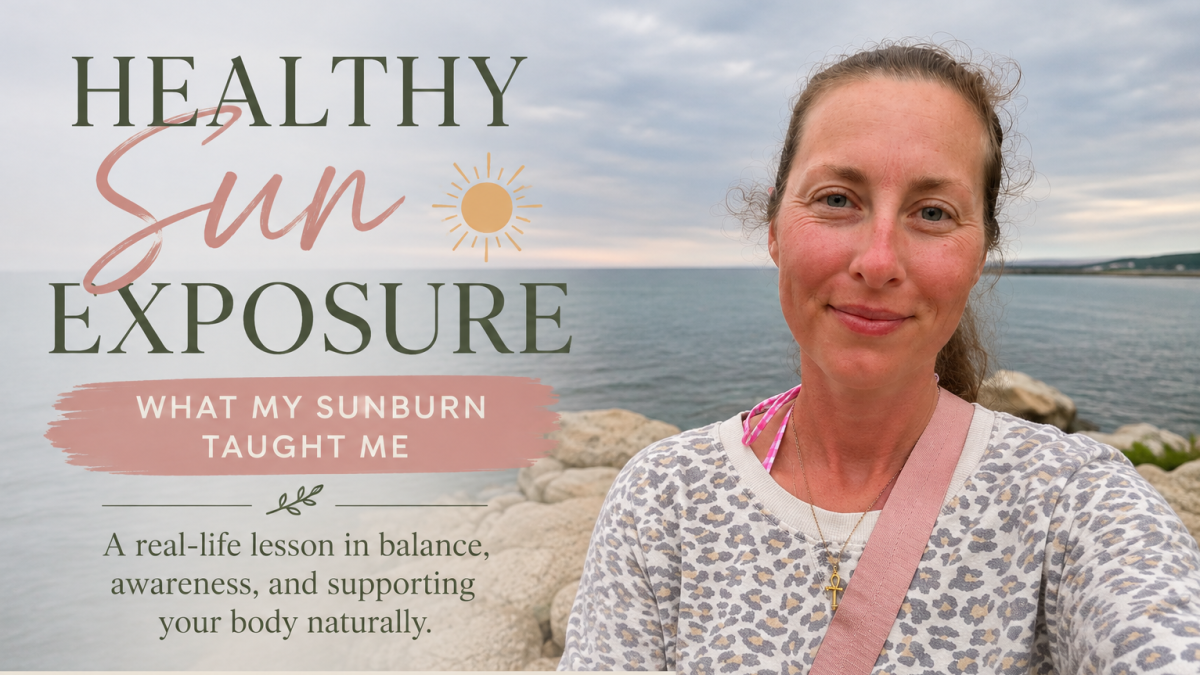
Learn what my sunburn taught me about healthy sun exposure, hydration, recovery, and taking a balanced approach to time in the sun.
My Sunburn Taught Me an Important Lesson About Sun Exposure
One unexpected day at the beach reminded me that health is rarely as simple as one habit, one food, or one wellness tip.
It Wasn't the Day I Expected to Get Sunburned
At the end of June, I spent the day at the beach in Cape Cod.
If you had asked me beforehand whether I thought I'd come home with one of the worst sunburns I'd had in years, I would have confidently said no.
I love the beach in every season and almost every kind of weather, and this day was overcast. Gray. Windy. Around 70 degrees.
I was wearing a sweatshirt. My legs were covered with a towel. I had a hat on.
I was journaling, spending time in meditation, and working through some emotional healing.
At some point, I closed my eyes and accidentally fell asleep.
When I finally woke up, I immediately realized something wasn't right.
Despite the cool temperatures and cloudy skies, my face- especially my cheeks- had become significantly sunburned.
That unexpected experience reminded me of something I think is incredibly important when it comes to health.
Rarely does one habit determine the outcome.
Health Is About The Bigger Picture
Over the years, I've made many changes that are supportive of my overall health.
I haven't consumed seed oils in more than eight years.
I spend time outdoors throughout the year whenever possible.
I often avoid wearing sunglasses while walking outside so my eyes can receive natural light, although I sometimes wear them when driving or whenever they help me see safely.
I focus on eating nutrient-dense foods, staying hydrated, and supporting my body's overall resilience.
Do I believe those habits matter?
Absolutely.
But none of them make me immune to spending too many hours in direct sunlight.
That day reminded me that total sun exposure still matters.
Just like most aspects of health, there isn't one magic habit that overrides everything else.
Our Bodies Adapt Best Gradually
One of the biggest lessons I've learned over the years is that our bodies often thrive when they're given opportunities to adapt gradually.
The same is true with sun exposure.
Rather than going from very little sunlight to spending an entire afternoon in direct sun, it's more supportive to build tolerance slowly over time.
For many people, that may look like spending short periods outdoors throughout the year whenever possible.
Morning walks. Eating lunch outside. Playing with your kids. Gardening.
Enjoying a few minutes of sunshine before heading back inside.
Those small moments add up.
Our goal isn't to fear the sun.
It's to develop a healthy relationship with it while respecting its power.
The Sun Isn't the Enemy
One thing I want to be very clear about is that this experience didn't make me fear the sun.
If anything, it reinforced my respect and reverence for it.
Sunlight plays an important role in many aspects of our health. It influences our circadian rhythm, vitamin D production, mood, energy, sleep, and much more.
Personally, I believe many of us spend far too much time indoors and have become disconnected from the natural rhythms our bodies were designed to experience.
My goal isn't to avoid the sun.
It's to develop a healthier relationship with it.
That means enjoying its many benefits while also respecting that too much exposure- especially when our bodies haven't had time to gradually adapt- can still lead to a sunburn.
If you're interested in learning more about the many ways sunlight supports our health, I've written an entire article on the topic.
>>> Read: The Benefits of Healthy Sun Exposure
There Isn't One "Secret" To Preventing Sunburn
Every summer, I see conversations online claiming there's one thing that completely prevents sunburn.
"Just eliminate seed oils."
"Never wear sunglasses."
"This supplement prevents sunburn."
"Throw away your sunscreen."
I understand why these conversations are happening.
Personally, I do believe the foods we eat, the types of fats we consume, and our relationship with natural light influence how our bodies function.
I also believe conventional sunscreens deserve closer scrutiny because many contain ingredients that people choose to avoid. When I know I'll be spending prolonged time in direct sunlight, I personally prefer mineral-based sunscreens with simpler, cleaner ingredient lists.
At the same time, I don't believe any one habit completely eliminates the possibility of getting burned.
Healthy sun exposure is about looking at the whole picture.
Eating a nutrient-dense diet.
Staying hydrated.
Getting regular sunlight throughout the year.
Building sun exposure gradually.
Paying attention to how long I'm outside.
Wearing protective clothing or seeking shade when appropriate.
Using a clean sunscreen when I know I'll be in prolonged direct sunlight.
Respecting the power of the sun.
Each of those choices becomes one piece of a much bigger picture.
Supporting My Skin After A Sunburn
Fortunately, my skin healed surprisingly quickly.
Rather than reaching for dozens of different products, I focused on supporting my body in the same holistic way I try to approach most aspects of health.
I applied real aloe vera to soothe my skin.
Used a nourishing tallow-based moisturizer to help support the skin barrier.
Focused on drinking plenty of water along with electrolytes.
Continued eating nutrient-dense foods that support healing and recovery.
Got plenty of sleep.
Within less than a week, my skin had healed remarkably well.
I don't believe there was one single reason it recovered the way it did.
I believe it was the result of many healthy habits working together.
What This Experience Reinforced For Me
Ironically, my sunburn wasn't really about my skin.
It reinforced one of the biggest principles behind The Radiant Health Method.
Health is rarely determined by one food.
One supplement. One habit. One product. Or one protocol.
Instead, it's usually the result of many different factors interacting with one another.
That's why I spend so much time helping people connect the dots rather than searching for one perfect answer.
Because lasting health is rarely built on one thing.
It's built on understanding the bigger picture.
Looking Beyond Individual Habits
One of the biggest mistakes I see in the wellness world is the belief that there's always one habit responsible for every outcome.
Sometimes we want health to be that simple.
But our bodies are wonderfully complex.
Nutrition matters. Movement matters. Sleep matters. Stress matters. Relationships matter. Hydration matters. Sunlight matters. The environment matters.
And perhaps most importantly, how all of those pieces work together matters.
When we begin viewing health through that lens, we stop chasing magic solutions and start building sustainable habits that support our bodies over time.
Looking For A Personalized Approach?
If you've been doing many of the "right" things but still don't feel your best, it may simply mean there's another connection or piece of the puzzle waiting to be discovered.
During a Root Cause Clarity Session, we'll step back and look at your symptoms, health history, lifestyle, and patterns to better understand what deserves your attention first.
Because lasting healing isn't about finding one perfect answer.
It's about understanding how your unique pieces fit together.
>>> Learn More About the Root Cause Clarity Session
Frequently Asked Questions
Can you get sunburned on a cloudy day?
Yes. Even when it's cloudy or cool outside, ultraviolet (UV) rays can still reach your skin. Cloud cover may reduce some UV exposure, but it doesn't eliminate it. That's why it's still possible to get a significant sunburn on an overcast day.
Do seed oils make you more likely to get sunburned?
This is an area receiving increasing attention in the wellness community. Personally, I believe reducing or eliminating industrial seed oils supports overall health and influences how the body responds to sunlight. At the same time, avoiding seed oils doesn't make someone immune to excessive UV exposure. Factors such as total sun exposure, skin type, hydration, gradual adaptation, and protective clothing also play important roles.
What's the best way to build sun tolerance?
Gradual, consistent sun exposure throughout the year is more supportive than spending long periods in direct sunlight after very little exposure. Paying attention to your body's response and avoiding burns is an important part of developing a healthy relationship with sunlight.
How did you support your skin after your sunburn?
I focused on supporting my body's natural recovery by using real aloe vera, a tallow-based moisturizer, staying well hydrated with water and electrolytes, eating nutrient-dense foods, and getting plenty of rest. Rather than relying on one product, I focused on supporting healing from multiple angles.
Do I need sunscreen?
The answer depends on your skin, the UV index, how long you'll be outside, and whether you can seek shade or wear protective clothing. My preference is to gradually build sun tolerance over time, use clothing and shade whenever practical, and choose clean mineral sunscreens when prolonged sun exposure is unavoidable. I personally avoid conventional chemical sunscreens because I prefer to minimize unnecessary chemical exposure.
Continue Your Radiant Health Journey
Every article is designed to help you better understand your body, connect the dots, and discover what deserves your attention first.
Healing isn't about finding one perfect habit. It's about understanding how the many pieces work together to support your body's natural ability to heal.
If you'd like to continue learning, these articles build on the ideas we explored here.
Hydration: More Than Just Drinking Water
Learn why hydration involves more than simply drinking water and discover practical ways to better support your body's fluid balance.
>>> Read Hydration: More Than Just Drinking Water
Why Eating Organic Isn't Always Enough to Heal
Discover why nutrition is foundational to health while also recognizing that it's only one piece of the bigger picture.
>>> Read Why Eating Organic Isn't Always Enough to Heal
Red Light Therapy: Recovery Is Where Healing Happens
Explore how supporting recovery, mitochondrial health, and cellular function can complement a holistic wellness routine.
>>> Read Red Light Therapy: Recovery Is Where Healing Happens
The Radiant Health Method
Learn how six interconnected pillars work together to support lasting health and why connecting the dots often leads to greater clarity.
>>> Read The Radiant Health Method
Categories: : Family Wellness, Functional Nutrition, Healthy Living, Holistic Healing, Holistic Health, Holistic Nutrition, Integrative Nutrition, Personal Story, Summer Wellness