Allergy Breastfeeding: Can Babies React to Foods?
 Dr. Beata Harasim
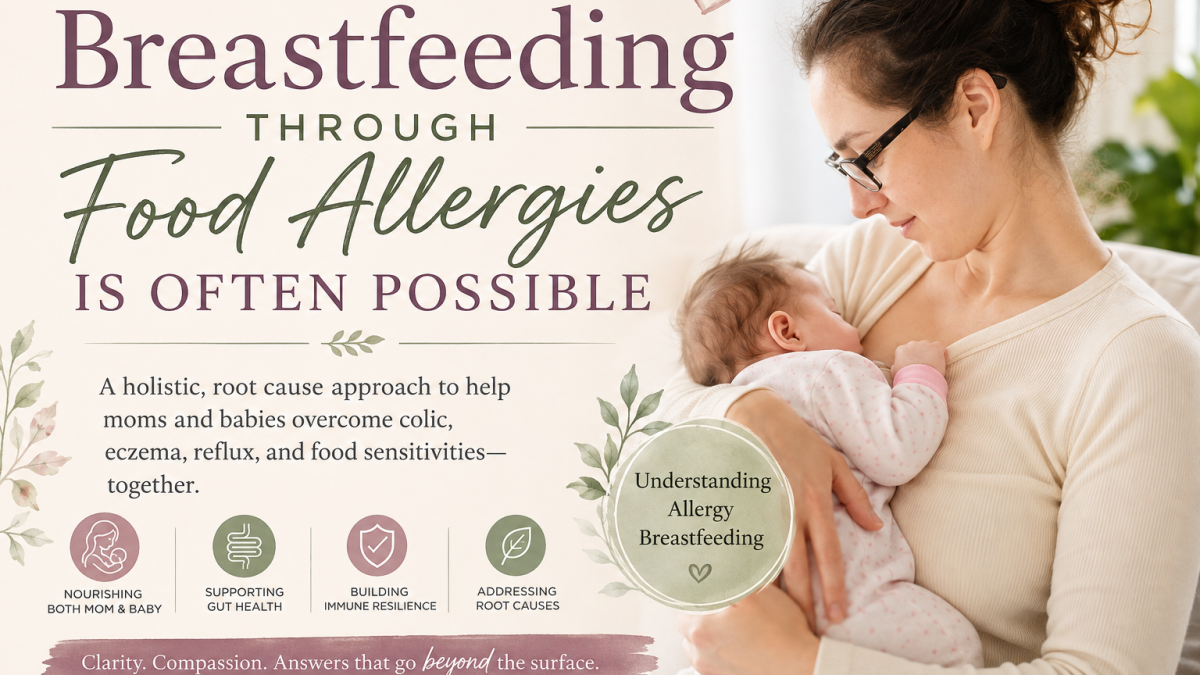
Can babies react to foods through breast milk? Learn about allergy breastfeeding, elimination diets, gut health, and personalized support.
Understanding Allergy Breastfeeding: Can Babies React to Foods Through Breast Milk?
Many parents are told their baby is "allergic to breast milk." In reality, that's rarely what's happening. Here's what every breastfeeding family should know about food proteins, elimination diets, gut health, and continuing the breastfeeding relationship.
When Breastfeeding Doesn't Feel Simple
Breastfeeding is often described as the perfect food for babies.
And in many ways, it truly is.
Breast milk provides ideal nutrition, immune protection, beneficial bacteria, hormones, enzymes, antibodies, and countless bioactive compounds that support growth and development.
So when a breastfed baby develops eczema, reflux, digestive symptoms, blood in the stool, excessive fussiness, or other signs of food sensitivity, parents often feel confused.
Many begin asking: "Is my baby allergic to my breast milk?"
It's an understandable question.
Fortunately, in the vast majority of cases, the answer is no.
Babies Usually Aren't Allergic To Breast Milk
One of the biggest misconceptions I hear is that a baby is allergic to breast milk itself.
While there are a few extremely rare medical conditions that affect how babies process certain components of breast milk, those situations are uncommon.
Far more often, a baby is reacting to food proteins or other food components that pass from the mother's diet into her breast milk.
Tiny amounts of dietary proteins can enter breast milk after a mother eats.
For some babies—particularly those with food allergies or food protein sensitivities—even these small amounts may trigger symptoms.
That doesn't mean breast milk is the problem.
It simply means the baby's immune system is responding to something that has traveled through it.
Foods That May Pass Through Breast Milk
Research has shown that proteins and other components from certain foods may be detectable in breast milk after a mother consumes them.
Some of the more common foods that may be associated with reactions include:
- Cow's milk
- Soy
- Egg
- Wheat
- Peanut
- Tree nuts
- Fish
- Corn (in some babies)
Every baby is different.
One baby may tolerate a food perfectly while another reacts to very small amounts.
This is why individualized care is so important.
Common Symptoms Parents Notice
Every baby is unique, but some of the symptoms that may raise concern include:
- Blood or mucus in the stool
- Persistent eczema
- Excessive spit-up or reflux
- Chronic congestion
- Colic-like symptoms
- Frequent diarrhea
- Constipation
- Gas and abdominal discomfort
- Poor weight gain
- Unexplained irritability
- Difficulty settling after feeds
- Poor sleep
These symptoms don't automatically mean food allergies are present.
There are many possible contributing factors.
But they can provide important clues that deserve further investigation.
Common Breastfeeding Allergy Diagnoses
You may hear healthcare providers use terms such as:
- CMPA (Cow's Milk Protein Allergy)
- MSPI (Milk Soy Protein Intolerance)
- FPIAP (Food Protein-Induced Allergic Proctocolitis)
- FPIES (Food Protein-Induced Enterocolitis Syndrome)
These diagnoses describe different ways babies may react to food proteins.
Although the names can sound intimidating, many babies improve significantly once the appropriate foods are identified and managed.
Does This Mean You Need To Stop Breastfeeding?
In many cases...
No.
One of the most heartbreaking things I hear from parents is:
"They told me I needed to stop breastfeeding."
While every family and every medical situation is unique, many breastfeeding relationships can continue successfully.
Sometimes that means making thoughtful dietary changes.
Sometimes additional medical evaluation is appropriate.
Sometimes more breastfeeding support is needed.
The goal isn't simply removing foods.
The goal is helping both mother and baby thrive while preserving breastfeeding whenever possible.
Elimination Diets Aren't Meant To Last Forever
Many moms are placed on extremely restrictive elimination diets.
Some are told to avoid ten or fifteen different foods without a clear explanation or plan.
That can quickly become exhausting.
Nutritionally challenging.
Emotionally overwhelming.
In my experience, elimination diets work best when they're:
- Purposeful
- Individualized
- Carefully monitored
- Reassessed over time
The goal isn't to eliminate as many foods as possible.
It's to identify what truly matters while preserving the mother's nutrition and quality of life.
Looking Beyond The Food
This is where my perspective differs slightly from many conversations surrounding allergy breastfeeding.
Food absolutely matters.
But I rarely stop there.
I also begin asking:
- What does the mother's gut health look like?
- Are there signs of increased intestinal permeability ("leaky gut")?
- How healthy is digestion?
- What does overall nutrition look like?
- How is stress affecting both mom and baby?
- What other factors may be influencing the immune system?
These questions don't replace medical care.
They simply help us look at the bigger picture.
Because lasting healing often involves understanding why the immune system became reactive—not simply removing foods forever.
A Root Cause Perspective
One of the philosophies that guides all of my work is that symptoms are often meaningful clues.
Food reactions tell us something.
Inflammation tells us something.
Digestive symptoms tell us something.
Food reactions can offer an important clue, but identifying the food is only one part of understanding what may be happening.
A deeper understanding often comes from exploring the factors that may be influencing the body’s response, including gut health, immune regulation, inflammation, stress, and the overall health of both mother and baby.
Looking beyond the immediate trigger can help reveal the broader patterns that deserve attention.
And that's where lasting healing frequently begins.
My Breastfeeding Journey
Breastfeeding has been one of the greatest privileges of my life.
I breastfed my daughter for seven years.
As both a holistic doctor and an allergy breastfeeding specialist, I've also had the privilege of helping many families continue breastfeeding through food allergies, eczema, digestive concerns, and other feeding challenges.
One of the greatest lessons I've learned is this:
Parents need reassurance.
They need education.
They need compassionate guidance.
And they need someone willing to look beyond a diagnosis to understand the whole picture.
Continue Learning: Free Workshop for Breastfeeding Moms
If your baby is experiencing colic, eczema, reflux, food allergies, or other feeding challenges, I've created a free workshop to help you better understand some of the common patterns I see as a holistic doctor and allergy breastfeeding specialist.
In 3 Key Components for Moms Breastfeeding Babies with Colic, Eczema, Reflux & Allergies, you'll learn practical strategies that can help you begin connecting the dots and better understand what may deserve your attention.
Need Personalized Guidance?
Every mother.
Every baby.
Every breastfeeding journey.
They're all unique.
That's why there isn't one elimination diet or one protocol that works for everyone.
If you're navigating food allergies while breastfeeding and would like help connecting the dots, I'd love to support you.
If you'd like individualized support, a Root Cause Clarity Session allows us to look at your health history, your baby's symptoms, your breastfeeding journey, and the bigger picture to identify what deserves your attention first.
Together, we'll create a clear, personalized roadmap so you can move forward with greater confidence.
>>> Learn More About the Root Cause Clarity Session
Frequently Asked Questions
Can babies react to foods through breast milk?
Yes. Small amounts of food proteins and other food components from a mother's diet can pass into breast milk. Some babies with food allergies or food protein sensitivities may react to these, even though they are not allergic to the breast milk itself.
Can a baby be allergic to breast milk?
True allergies to breast milk itself are extremely rare and it would be evident right away. More commonly, babies react to food proteins that have passed into breast milk after the mother eats certain foods.
What foods commonly cause reactions through breast milk?
Every baby is different, but common triggers may include:
- Cow's milk
- Soy
- Egg
- Wheat
- Peanut
- Tree nuts
- Fish
Not every baby reacts to these foods, and identifying triggers should always be individualized.
What are signs of a food sensitivity in a breastfed baby?
Possible signs may include:
- Blood or mucus in the stool
- Eczema
- Reflux
- Excessive fussiness
- Gas
- Digestive discomfort
- Diarrhea
- Constipation
- Poor weight gain
These symptoms don't automatically mean a food allergy is present, but they may deserve further evaluation.
Do I need to stop breastfeeding if my baby has a food allergy?
Not necessarily. Many breastfeeding families are able to continue breastfeeding successfully with individualized support, appropriate dietary modifications when needed, and ongoing monitoring. Every situation is unique, so it's important to work with knowledgeable healthcare professionals.
Should I start an elimination diet while breastfeeding?
Elimination diets may be helpful in some situations, but they should be purposeful and individualized whenever possible. Avoiding large numbers of foods without clear guidance can make breastfeeding more difficult and may unnecessarily limit nutrition.
Can gut health affect food sensitivities while breastfeeding?
Emerging research continues to explore the relationship between gut health, intestinal permeability, immune regulation, and food sensitivities. While food avoidance may sometimes be necessary, I also believe it's important to understand the bigger picture and explore factors that may be contributing to immune system reactivity.
Can babies outgrow food allergies?
Many babies eventually heal from certain food protein allergies or sensitivities, although every child is different. Your healthcare team can help determine when and how foods may be safely reintroduced.
Where can I find personalized support for allergy breastfeeding?
Every breastfeeding journey is unique. During a Root Cause Clarity Session, we look at your health history, your baby's symptoms, your breastfeeding journey, and the bigger picture to help identify what deserves your attention first. If you're just getting started, you can also download my free Holistic Breastfeeding Guide for practical strategies to support both you and your baby.
Continue Your Radiant Health Journey
Every article is designed to help you better understand your body, connect the dots, and discover what deserves your attention first.
Healing isn't about finding one perfect protocol. It's about understanding how the pieces fit together so you can better support your body's natural ability to heal.
If you're navigating food allergies while breastfeeding, I created this free workshop specifically for families like yours.
🎥 Free Workshop: 3 Key Components for Moms Breastfeeding Babies with Colic, Eczema, Reflux & Allergies
If your breastfed baby is experiencing colic, eczema, reflux, food allergies, or other feeding challenges, this free workshop explores three foundational areas that I believe deserve attention.
You'll learn why these symptoms often require looking beyond a diagnosis, how a holistic perspective can help you better understand what's happening, and why supporting both mom and baby can be such an important part of the journey.
If you'd like to continue learning, these articles build on the ideas we explored here.
The Holistic Benefits of Breastfeeding
Discover why breastfeeding provides far more than nutrition and how it supports both mother and baby in ways that extend well beyond infancy.
>>> Read The Holistic Benefits of Breastfeeding
The Radiant Health Method
Explore the philosophy and framework that guides everything I teach. Learn why seemingly unrelated symptoms often share common underlying patterns and how connecting the dots can create greater clarity.
>>> Read The Radiant Health Method
Why Eating Healthy Isn't Always Enough to Heal
Learn why food quality creates an important foundation for health—but why lasting healing often involves much more than what's on your plate.
>>> Read Why Eating Healthy Isn't Always Enough to Heal
What Is Your Body Responding To?
Discover why symptoms are often meaningful clues and how learning to understand them can change the way you approach healing.
>>> Read What Is Your Body Responding To?
Are You an IBCLC or Breastfeeding Professional?
If you're an International Board Certified Lactation Consultant (IBCLC) or another healthcare professional who supports breastfeeding families, I'd love to connect.
Over the years, I've developed a special interest in helping families navigate complex breastfeeding challenges, particularly when babies are experiencing colic, reflux, eczema, food allergies, digestive symptoms, or other concerns that may involve more than lactation support alone.
I believe some of the best outcomes happen when healthcare professionals work together.
Lactation consultants, pediatricians, dentists, bodyworkers, therapists, nutrition professionals, and other practitioners each bring valuable perspectives that can help families feel more supported and better understood.
If you regularly work with families whose babies are experiencing food allergies, eczema, reflux, or digestive concerns while breastfeeding, I'd especially love to connect. These are some of the most rewarding—and often most complex—cases I have the privilege of supporting.
One of the resources I'm most proud of is my growing directory of trusted breastfeeding professionals.
If you share a compassionate, evidence-informed approach to supporting families, I'd be honored to learn more about your practice.
>>> Add Your Practice to My Preferred Provider Directory
You'll also receive occasional emails with educational resources, opportunities for collaboration, and updates about new workshops and resources for breastfeeding families.
Together, we can help more mothers feel confident, supported, and empowered throughout their breastfeeding journey.
Categories: : Baby Health, Breastfeeding, Children's Health, Family Wellness, Food Allergies & Sensitivities, Gut Health, Holistic Health, Holistic Nutrition, Integrative Nutrition, Leaky Gut, Motherhood, Pediatric Gut Health, Women's Health